If you’ve been hearing the term generative AI everywhere and wondering what it actually means, you’re not alone. Many beginners feel confused because the explanations often sound technical or exaggerated.
This guide explains what is generative AI for beginners in simple language, without hype, jargon, or unrealistic claims. By the end, you’ll understand what it is, how it works, where it’s used, and what it can and cannot do.
What Is Generative AI for Beginners?
Generative AI is a type of artificial intelligence that can create new content instead of just analyzing existing data.
For beginners, the easiest way to think about it is this:
Generative AI learns patterns from data and then uses those patterns to create text, images, audio, or code that looks human-made.
This content can include:
- Written text (articles, summaries, emails)
- Images or illustrations
- Music or sound
- Computer code
Unlike traditional software that follows fixed rules, generative AI produces results based on probabilities learned from large datasets.
Table of Contents
How Generative AI Works (Beginner View)
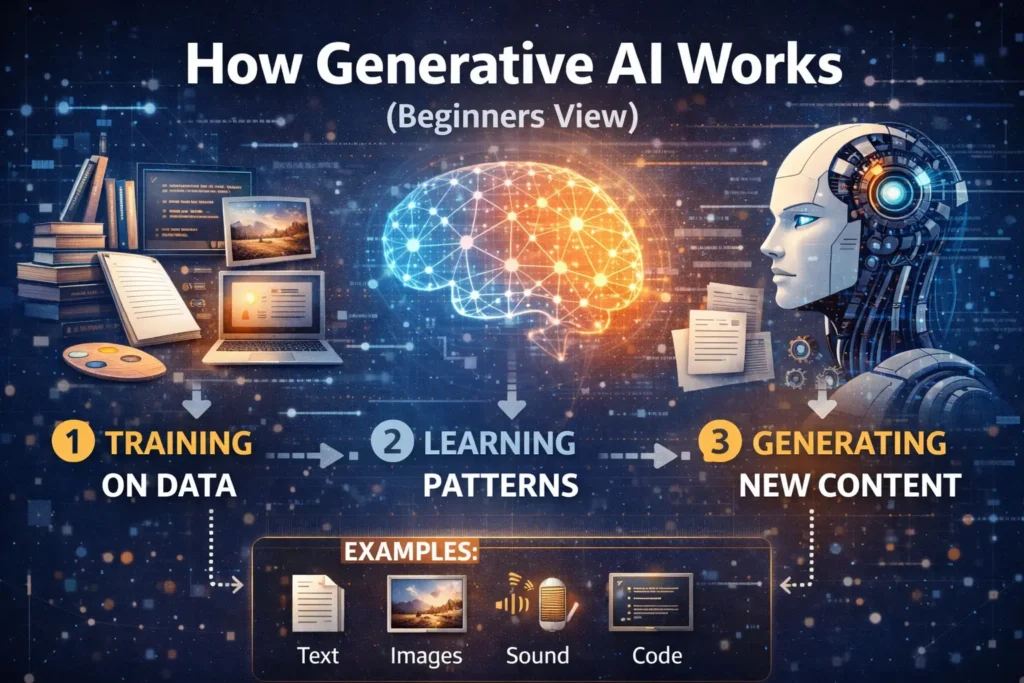
To understand what is generative AI for beginners, it helps to break the process into simple steps.
- Training on data
Generative AI models are trained on large collections of text, images, or other data. - Learning patterns
The system learns how words, shapes, or sounds usually appear together. - Generating new output
When you give it a prompt, it predicts what should come next based on what it learned.
A simple example:
- If you type: “Write a short introduction about time management”
- The AI predicts likely sentences based on similar content it has seen before.
It does not “understand” like a human. It recognizes patterns.
Generative AI vs Traditional AI
Many beginners mix up generative AI with other types of AI. Here’s a simple comparison.
| Feature | Traditional AI | Generative AI |
|---|---|---|
| Main role | Analyze or classify data | Create new content |
| Output type | Decisions or predictions | Text, images, audio |
| Creativity | Very limited | Appears creative |
| Example use | Spam detection | Writing assistance |
This difference matters because generative AI focuses on creation, not just decision-making.
Real Examples of Generative AI You May Already Use
One reason people ask what is generative AI for beginners is because they are already using it without realizing.
Common examples include:
- Writing assistants that help draft emails or blog posts
- Image tools that generate illustrations from text
- Chatbots that answer questions in natural language
- Code suggestion tools for developers
I’ve noticed many people first encounter generative AI when they use a writing tool and feel surprised by how “human” the output looks. That reaction is normal.
Where Generative AI Is Used Today
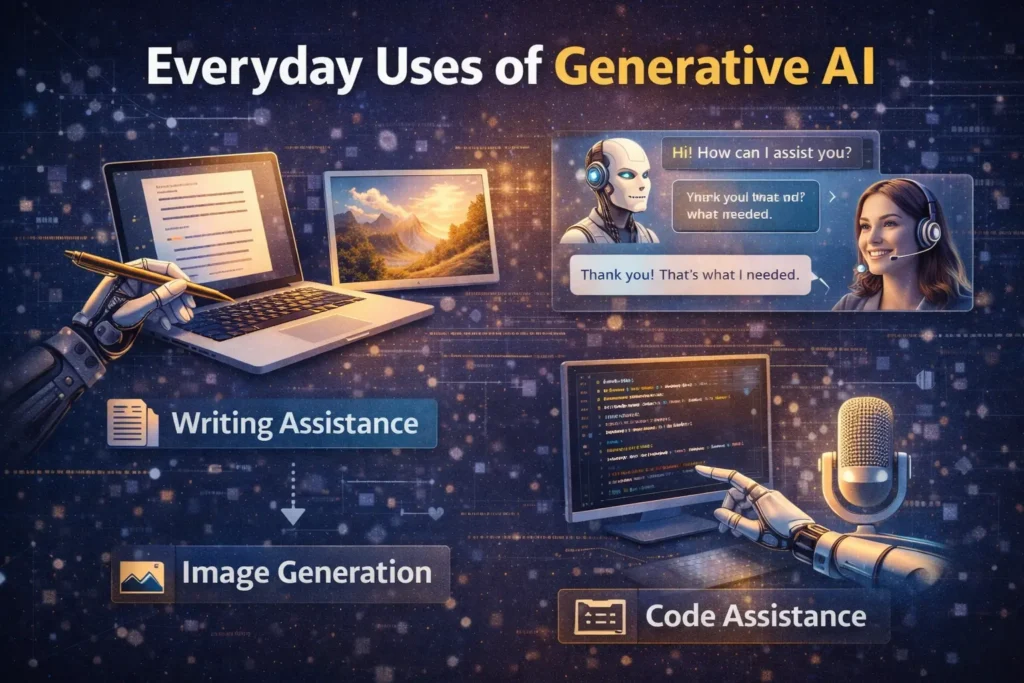
Generative AI is used across many everyday fields, often quietly in the background.
Some common areas include:
- Education: study aids, summaries, explanations
- Apps: content suggestions, smart replies
- Design: mockups, visual concepts
- Customer support: automated chat responses
You can learn more about this in our related guide:
👉 How AI Tools Are Used in Everyday Apps
What Generative AI Can Do Well
Understanding what is generative AI for beginners also means knowing its strengths.
Generative AI is good at:
- Drafting content quickly
- Rewriting or summarizing text
- Generating ideas or outlines
- Explaining topics in simple language
It can save time, especially for repetitive tasks. However, speed does not always mean accuracy.
Limitations of Generative AI (Important)
Generative AI is not perfect, and beginners should know this early.
Some key limitations:
- It can produce incorrect information
- It may sound confident even when wrong
- It lacks real understanding or personal experience
- It depends heavily on the quality of prompts
I’ve personally seen AI generate answers that looked convincing but were slightly inaccurate. That’s why human review still matters.
Is Generative AI Replacing Humans?
A common beginner question is whether generative AI will replace people.
The realistic answer:
- It assists humans more than it replaces them
- It works best as a support tool
- Human judgment, creativity, and context are still required
Generative AI does not think, feel, or make decisions independently.
Is Generative AI Safe to Use?
Generative AI tools are generally safe when used responsibly.
Best practices include:
- Double-checking important information
- Avoiding sensitive personal data
- Using AI as a helper, not a final authority
For beginners, the safest approach is to treat AI output as a draft, not a finished product.
FAQs About Generative AI
What is generative AI for beginners in simple words?
Generative AI is technology that creates new content like text or images by learning patterns from data.
Does generative AI think like humans?
No. It predicts patterns but does not understand or think independently.
Can generative AI replace jobs?
It may change how some tasks are done, but it mainly supports human work rather than fully replacing it.
Is generative AI free to use?
Some tools offer free versions, while others require paid plans depending on features.
Do I need technical skills to use generative AI?
No. Many tools are designed for beginners with simple interfaces.
Conclusion: What Is Generative AI for Beginners?
To summarize, what is generative AI for beginners comes down to this:
Generative AI is a tool that creates content by learning from data. It is useful, time-saving, and widely used, but it has clear limitations and still needs human guidance.
If you approach it with curiosity instead of expectations of perfection, generative AI can be a helpful addition to your daily digital tools.
For your next read, check out:
👉 How AI Tools Are Used in Everyday Apps
👉 Monetize Snapchat in 2026: Complete Guide From a Creator Getting Paid by Snapchat